
Last updated November 25, 2026
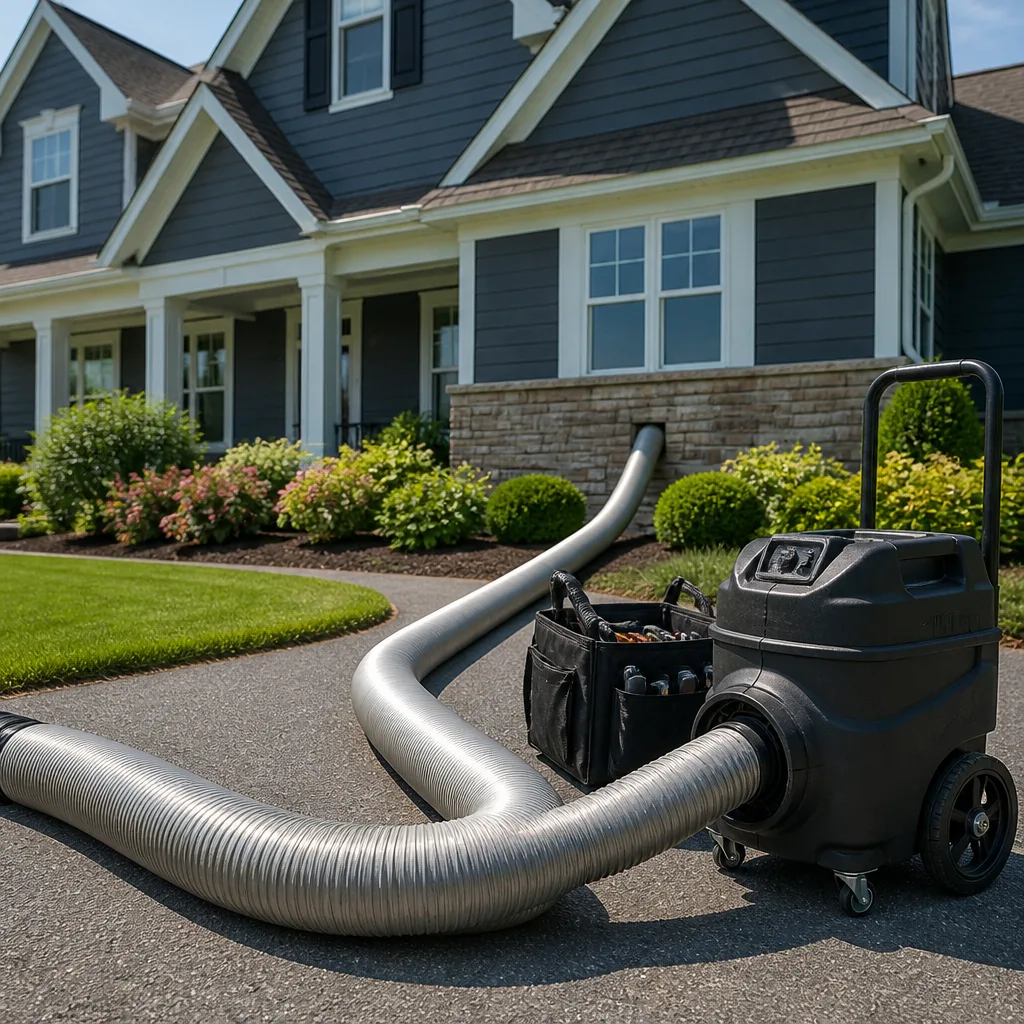 Whole-home duct cleaning
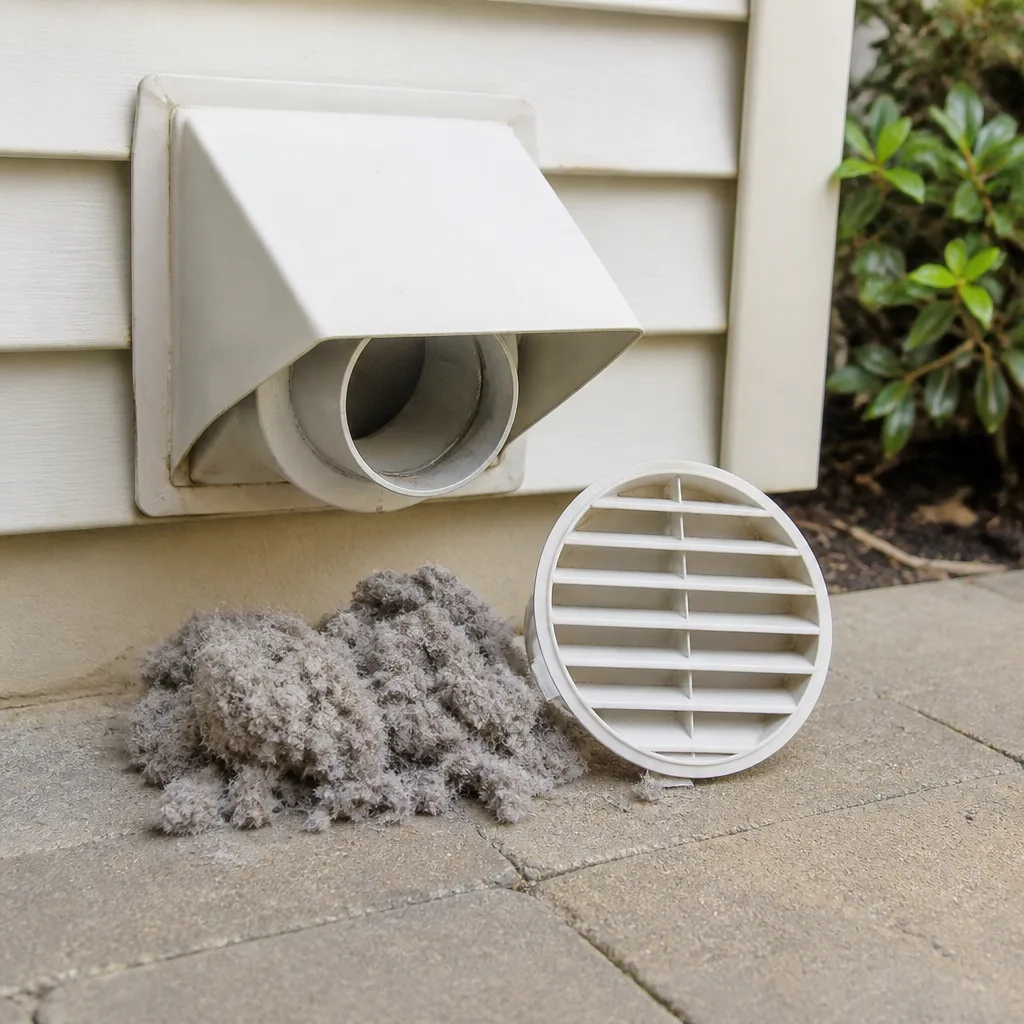 Dryer vent cleaning
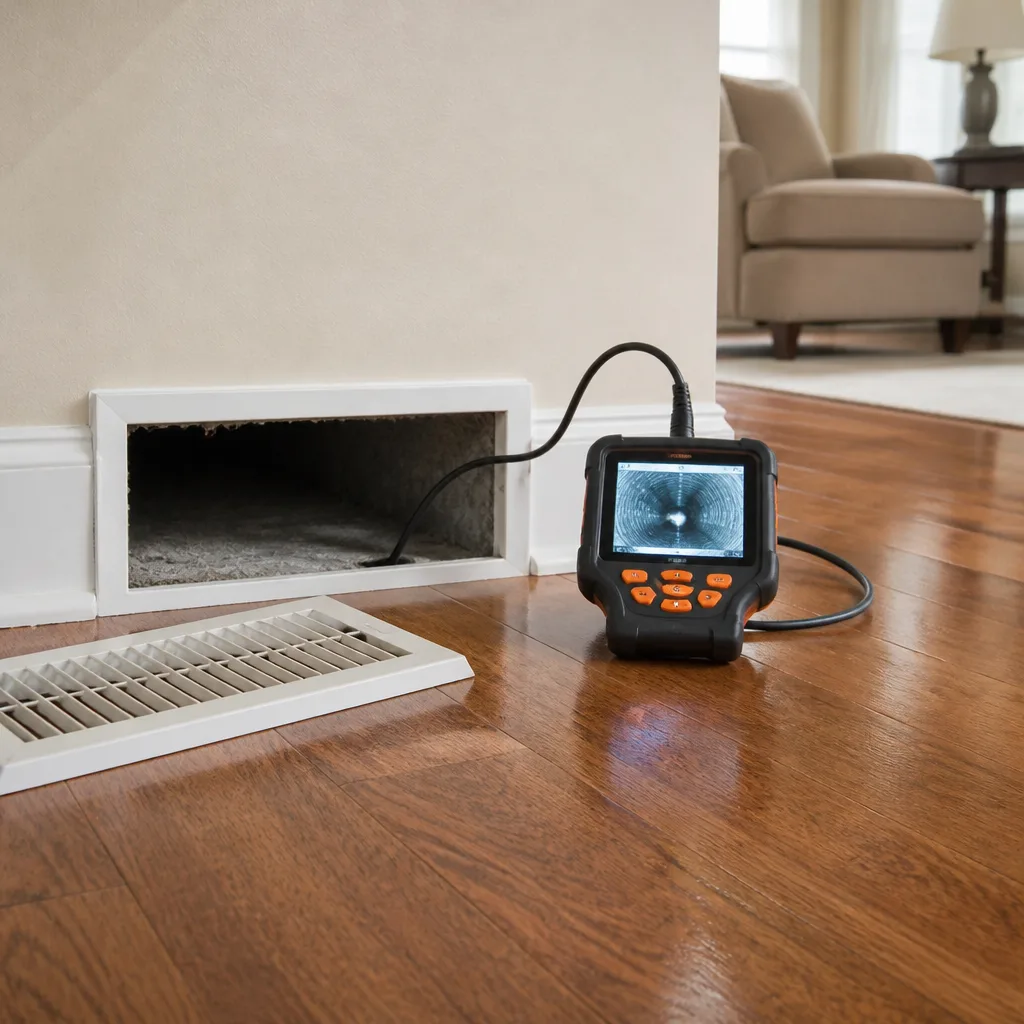 Camera inspection
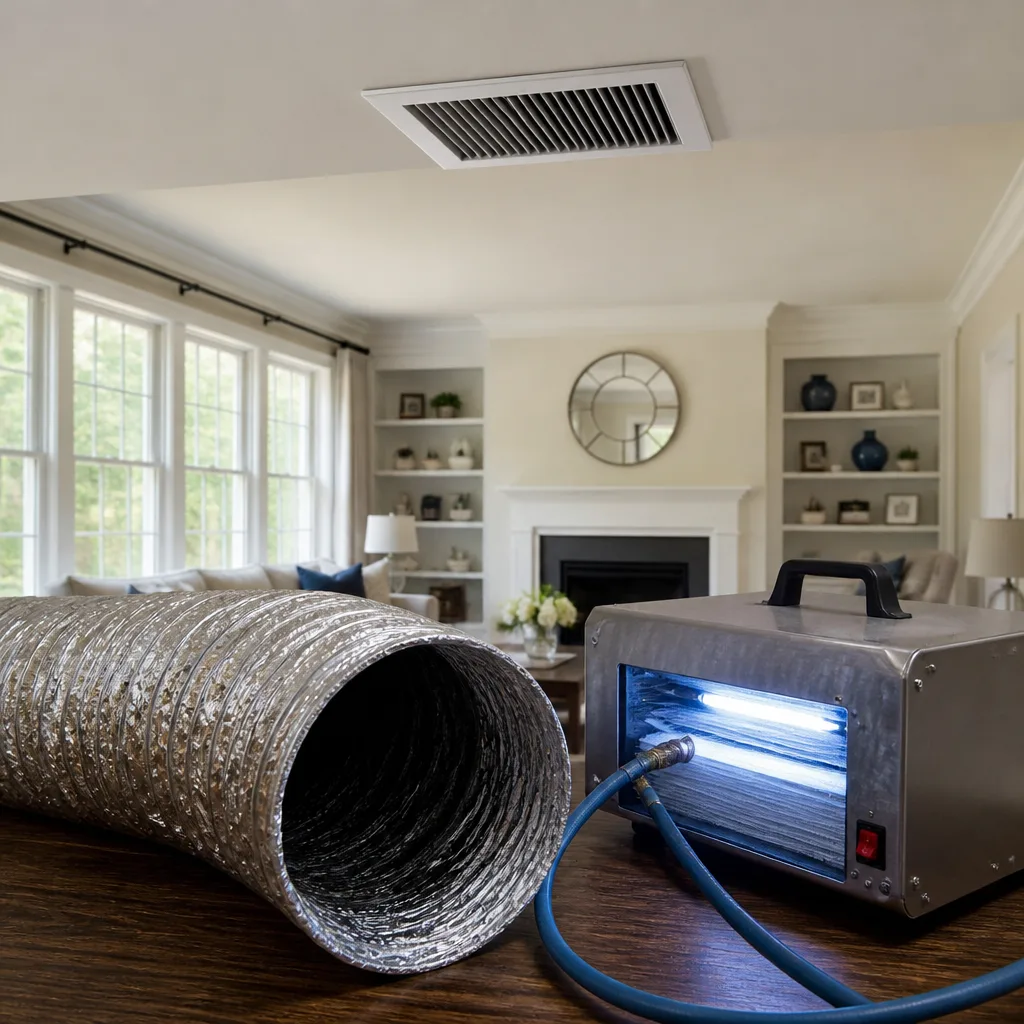 Sanitizing & deodorizing
Whole-system duct and dryer vent check with before-and-after photos - you see exactly what came out of your vents
That "$99 whole-house special" is a bait ad - the real number appears once they are in your hallway, or the "clean" is a shop-vac at the register. We photograph the inside of your ducts before and after instead.
Air Duct Cleaning Warning Signs: A Lynnwood Homeowner’s Reference Guide
Dust on your registers is not a warning sign. It’s normal. Every home in Lynnwood pulls dust through its return vents every single day, and some of it settles on the grille before it ever reaches the filter. Dust that reappears within 48 hours of wiping, or dust that’s dark gray rather than the light gray of ordinary household settle, is a different story entirely. It points to a specific failure in the system, and it usually has a specific cause. This guide maps the warning signs you can actually see to the problems they actually indicate, so you can tell the difference between a cosmetic annoyance and a system-level issue. We’re writing it from Lynnwood, because the houses and the weather here create some problems you won’t read about in a generic checklist.
Quick Answer
The core warning signs of a duct system that needs professional attention are dust that returns within 48 hours of cleaning, dark gray or black buildup at registers, rust streaking around metal grilles, uneven airflow between rooms, persistent musty or chemical odors, and visible mold or rodent evidence at supply vents. Any one of these is worth a professional inspection. Two or more together usually means the problem has moved past what a standard cleaning will fix on its own.
Styles & brands we work with
- Whole-home duct cleaning
- Dryer vent cleaning
- Camera inspection
- Sanitizing & deodorizing
Table of Contents
- Visual Warning Signs at Your Registers
- Airflow Symptoms and What They Actually Mean
- How to Read the Smells Coming From Your Vents
- Biological Indicators Specific to Pacific Northwest Homes
- When Warning Signs Mean Cleaning Isn’t Enough
- What You Can Check Yourself vs. What Needs Equipment
- How a Professional Duct Inspection Works
Visual Warning Signs at Your Registers
The register is the only part of your duct system most homeowners ever see, and it’s a surprisingly honest window into what’s happening deeper in the run. What matters is not whether there’s dust, but the color, texture, and how fast it comes back.
Light gray, fluffy dust that accumulates over a few weeks is ordinary. It’s what’s left after your filter has done its job and the remaining fine particles settle. Dark gray or black buildup is something else. It typically means either soot from the heating side of the system, degradation of internal duct insulation, or organic growth that has bonded to the duct surface. Texture matters too: sticky, smeary residue is a sign of moisture. Dry, powdery deposits are not.
- Fast-returning dust: Wipe a register clean with a damp cloth. If a visible film returns within 48 hours, the source is active and inside the system, not in the room.
- Dark gray or black accumulation: Points to soot, degrading liner, or growth. Worth a closer look with a camera.
- Visible debris inside the duct boot: Shine a flashlight up into the boot (the short section between the register and the main duct). Loose debris, fibrous material, or streaked surfaces are all meaningful.
- Rust streaking around metal registers: Condensation is forming somewhere it shouldn’t. This is a moisture problem first and a cleaning problem second.
- Lint or fiber accumulation downstream of a register: Suggests the duct liner is shedding, which gets worse with every cycle of the system.
One register showing a problem is common and often local. Three or more registers showing the same pattern usually means the issue is upstream, in the trunk line or at the air handler, and that’s the point where a full-system inspection beats a spot clean.
Airflow Symptoms and What They Actually Mean
“My bedroom is always cold” is the most common complaint we hear in Lynnwood homes, and dirty ducts are only one of about five possible causes. Before you assume the ducts are clogged, it’s worth knowing how to tell them apart.
A clogged duct typically reduces flow gradually over months and often affects far-end runs first. A blocked damper affects one zone and cuts flow abruptly. A failing blower shows up as reduced flow everywhere at once, sometimes paired with a motor hum or a change in the sound of the system. A collapsed or disconnected flex run causes a room to get almost no air at all while the rest of the house works fine.
- Test one room at a time. Hold a tissue or a strip of paper at the register face. A strong, steady flutter is healthy; a weak pull or a flutter that stops and starts points to restricted flow.
- Compare the far rooms against the near rooms. If the rooms at the end of the longest runs are the worst, that’s the classic sign of duct restriction or leakage.
- Check the filter first. A heavily loaded filter mimics a dirty duct. Replace it, run the system for a day, and see if flow improves.
- Look for disconnected flex runs. A supply boot in a crawl space or an attic that has slipped off its duct is a common and fixable cause of “one dead room.”
- Listen at the return. A whistling return is often undersized for the equipment, not dirty. Cleaning won’t fix a design problem.
In our experience, a dirty duct that’s genuinely choking airflow shows itself as a gradual decline you only notice after cleaning: the house suddenly heats and cools more evenly. If the change is abrupt, look for a damper or a mechanical failure instead.
How to Read the Smells Coming From Your Vents
Smell is the most reliable warning sign there is, and the most commonly misdiagnosed. What matters is the type of odor and whether it fades.
Burning dust at the first heat of the season is normal and should fade within a few hours of the system running. The dust that accumulated on the heat exchanger over the cooling season burns off once and stays gone. If the smell returns every time the heat cycles, or persists for days, that’s not seasonal. It suggests ongoing dust or debris contacting the heat exchanger, which is worth investigating before it becomes a system failure.
Musty or earthy odor points to mold or mildew. That’s a moisture problem, and it’s the one smell category that reliably gets worse the longer you ignore it.
Chemical or plastic smell is the one to take seriously. It usually indicates that the internal insulation or duct liner is degrading, or that something has melted or off-gassed inside the system. A burnt or acrid smell should prompt you to shut the system down and get a professional out, because it can indicate an electrical or heat-exchanger issue rather than a duct-cleaning job.
- Fades in a few hours: normal seasonal burn-off.
- Persists or returns each cycle: ongoing debris or heat-exchanger contact.
- Earthy or musty: moisture and growth, remediate before cleaning.
- Chemical or acrid: stop the system and get it inspected.
If you can smell anything inside the house when you’re near a supply register, the ducts are carrying it, and a camera inspection tells you where it’s coming from.
Biological Indicators Specific to Pacific Northwest Homes
This is the section a national checklist usually gets wrong. Lynnwood’s climate isn’t the extreme-heat market most duct cleaning content is written for. We have long damp seasons, mild temperatures, and a lot of homes that sit in partial shade. That combination changes what you should be looking for.
Moisture is the dominant factor here, not dust. Our wet months mean any duct system with a leak, a poor boot seal, or an attic run that condenses is going to grow something. The signs are usually at the supply register rather than inside the duct: light spotting or a powdery dark film on the boot interior, a musty smell when the fan runs, or visible dark staining where the duct insulation meets the boot.
Rodent activity is the other Pacific Northwest-specific one. Crawl spaces and the connections between floor cavities and duct boots are common routes. The signs are droppings inside the boot, chewed or torn insulation, nesting material, or the smell that follows. A torn boot seal is an entry point, and it’s often hidden behind the register. Chewed duct insulation is both a contamination problem and a hole in your system’s efficiency.
Here’s the distinction that matters. Visible mold at a register means the duct has been wet, and it means remediation before cleaning, not after. A standard clean will just spread spores. Rodent evidence means contamination removal and sealing of the entry point, then cleaning. A full-system approach treats both as remediation jobs with containment, not as a routine clean, which is why the equipment matters. Our operators use Abatement Technologies containment and negative-air equipment on remediation-level projects, Guardsman-grade sanitizing products on the decontamination step, and Rotobrush and Nikro systems on the duct runs themselves, so a job that starts as a mold or rodent call doesn’t get split between three contractors. You can read more about how we approach the service category on our air duct cleaning page.
When Warning Signs Mean Cleaning Isn’t Enough
This is the part most warning-sign guides skip. Some duct problems are not cleaning problems. Cleaning them makes the situation worse, or delays the real fix. A good operator will tell you when that’s the case, and a good warning-sign guide tells you the same.
- Active mold growth: Needs remediation protocol with containment and negative air pressure, not a standard clean. The moisture source has to be found and corrected first, or the mold returns.
- Duct liner or insulation degradation: When the liner is shedding or falling apart, cleaning disturbs it further. Partial or full duct replacement is the correct answer.
- Collapsed or disconnected flex runs: Cleaning a straight section that then dumps air into a crawl space is wasted effort. The run has to be reconnected or replaced first.
- Failed heat exchanger or blower: A burning smell, a mechanical noise, or reduced flow everywhere at once is an HVAC mechanical problem. Our full-system service covers duct, vent, and HVAC cleaning, and when the issue is mechanical we tell you so rather than charging for a clean that won’t help.
- Significant system leakage: If your ducts are losing a large share of their air to the attic or crawl space, sealing is the higher-value fix. Cleaning and sealing together is the sensible order.
- Asbestos or contaminated material (older homes): If your home has older ducting that might contain hazardous material, get it assessed before anyone opens the system. That’s a remediation and abatement question, not a cleaning one.
If any of these apply, the right move is a proper inspection that identifies the underlying cause, not a bargain clean that treats every duct like a generic pipe.
What You Can Check Yourself vs. What Needs Equipment
Some of this guide you can act on today with a flashlight, a tissue, and a damp cloth. Other parts need a camera and professional equipment, and no amount of homeowner effort will get you there. Here’s a clean split.
What you can check yourself:
- Wipe a register and check whether dust returns within 48 hours.
- Note the color of the dust: light gray is ordinary, dark gray or black is not.
- Shine a light into the duct boot and look for debris, staining, or rodent evidence.
- Test airflow at each register with a tissue.
- Replace the filter and note whether airflow improves.
- Smell the air at a supply register while the fan runs.
What genuinely needs professional equipment: a camera run through the trunk and branches, a pressure check on the return and supply sides, and any kind of measurement that tells you what’s actually inside the duct beyond the first few inches. A visible register only shows you the mouth of the run. The surface area of a typical home’s duct system is far larger than the parts you can see, and the contamination is rarely concentrated at the boot. Consumer shop vacs and the duct cleaning “brushes” sold at hardware stores don’t reach it, and they can damage flex duct or dislodge fragile liner. The professional systems built for this job, like the Rotobrush and Nikro equipment our technicians use, are purpose-built to agitate and extract along the full length of the run without tearing it up.
How a Professional Duct Inspection Works
A proper inspection answers three questions: what’s in the system, why it’s there, and whether cleaning is the right response. A visual check at the register alone can’t answer any of them. Here’s what a real inspection involves, in order, so you know what to expect and what to ask about.
- Walk-through and conversation. We ask about symptoms, the home’s age, prior work, and whether anyone in the house has had new respiratory symptoms. That context shapes where we look first.
- Camera inspection of the main trunk and branches. A camera on a flexible rod goes into the system through registers and access points, so we can see the actual condition of the run, not just the mouth.
- Checking the air handler and filter setup. A dirty filter, a wrong filter, or a filter bypass settles a surprising number of “dirty duct” complaints without any cleaning at all.
- Pressure and flow check. Comparing static pressure on the return and supply sides tells us whether the system is restricted or leaking. It’s the difference between a duct problem and an equipment problem.
- Moisture and biological assessment. Any hint of mold or rodent evidence triggers the remediation protocol. That means containment and negative air pressure to keep the work zone isolated, then decontamination with a Guardsman-grade sanitizing product before the duct runs are cleaned and the entry points sealed.
- Findings and a flat written estimate. One flat price for the full system, agreed before any work starts, with before-and-after photos so you have a record of what was there and what came out.
An inspection that starts and ends with a sales pitch is not an inspection. You should come away knowing what’s actually in the system and why, whether or not you decide to book the work. If you’d like to know more about what we typically find in Lynnwood homes, our Lynnwood Air Duct Cleaning team can walk you through it.
Common Mistakes to Avoid
- Wiping a register and calling it clean. A clean grille tells you nothing about the run behind it. Judge the duct by what’s inside the boot and the trunk, not the visible face of the register.
- Assuming it’s seasonal allergies. Persistent symptoms that ease when you leave the house and return when you come back point to an indoor source. That’s worth a duct inspection, even if the timing matches allergy season in Lynnwood.
- Treating mold with a standard clean. A normal clean on a mold-contaminated system spreads spores instead of removing them. Remediation with containment and negative air pressure comes first, then the standards clean.
- Letting a chemistry smell ride. A burnt or acrid smell is not a duct-cleaning problem. Shut the system down and get it inspected before you run it again.
- Choosing the quote with the per-vent price. Per-vent pricing is the most common way a low number turns into a larger invoice once the equipment is out. Ask for one flat price for the full system, in writing, before anyone starts.
- Skipping the filter question. A wrong or bypassed filter keeps the problem coming back no matter how well the ducts are cleaned. Sorting the filter out is part of the fix.
- Assuming the dryer is venting fine because the dryer runs. A clothing dryer with a restricted vent will still run. The lint accumulates in the vent run, and it’s a fire risk separate from the duct system. A dedicated dryer vent cleaning is the right job for that, and it’s worth doing on its own schedule.
See the difference
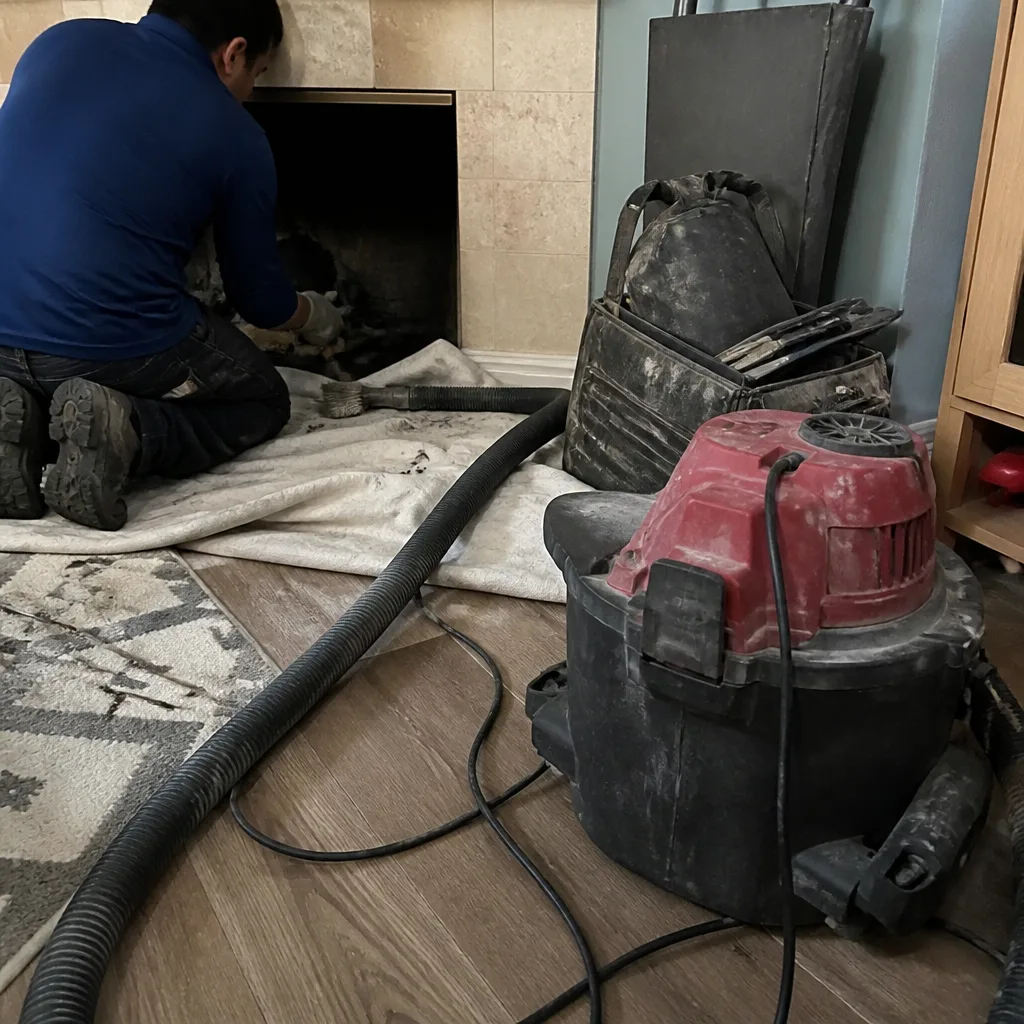 Before
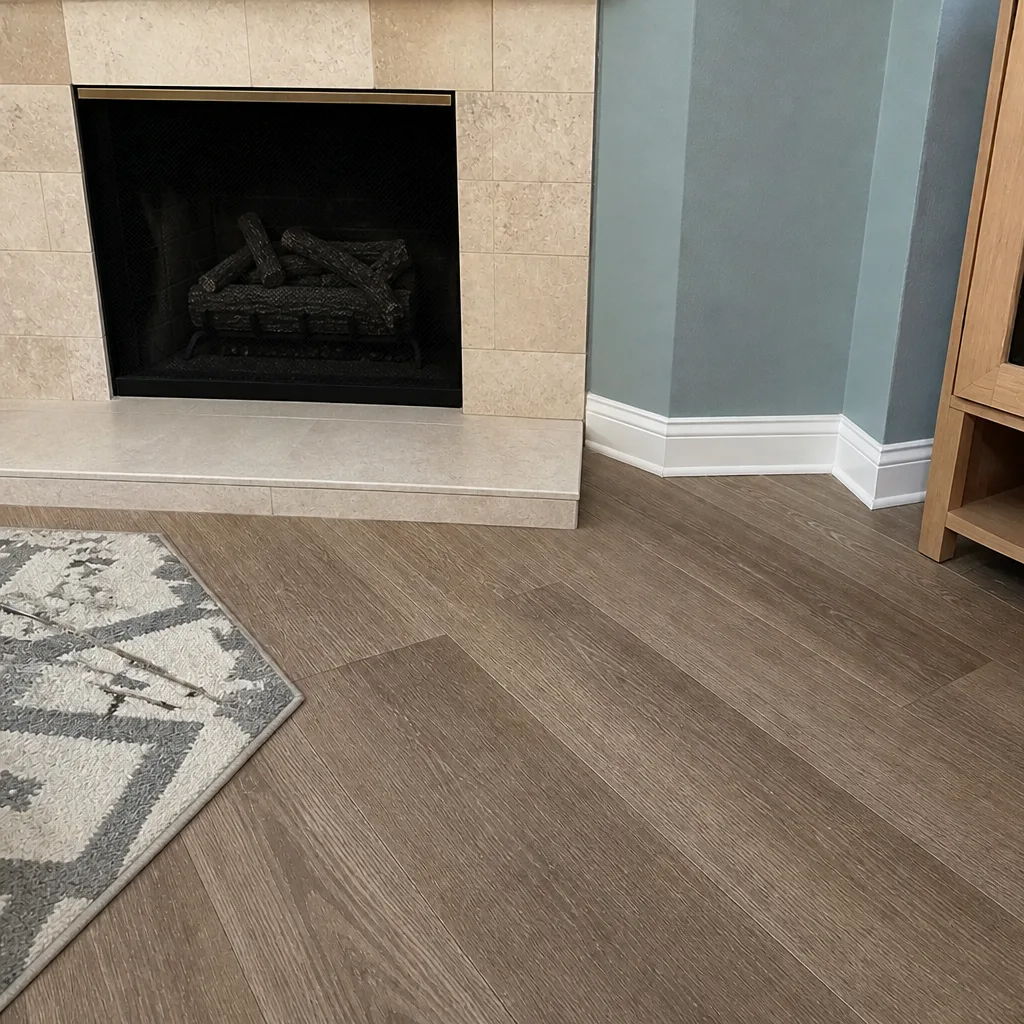 After
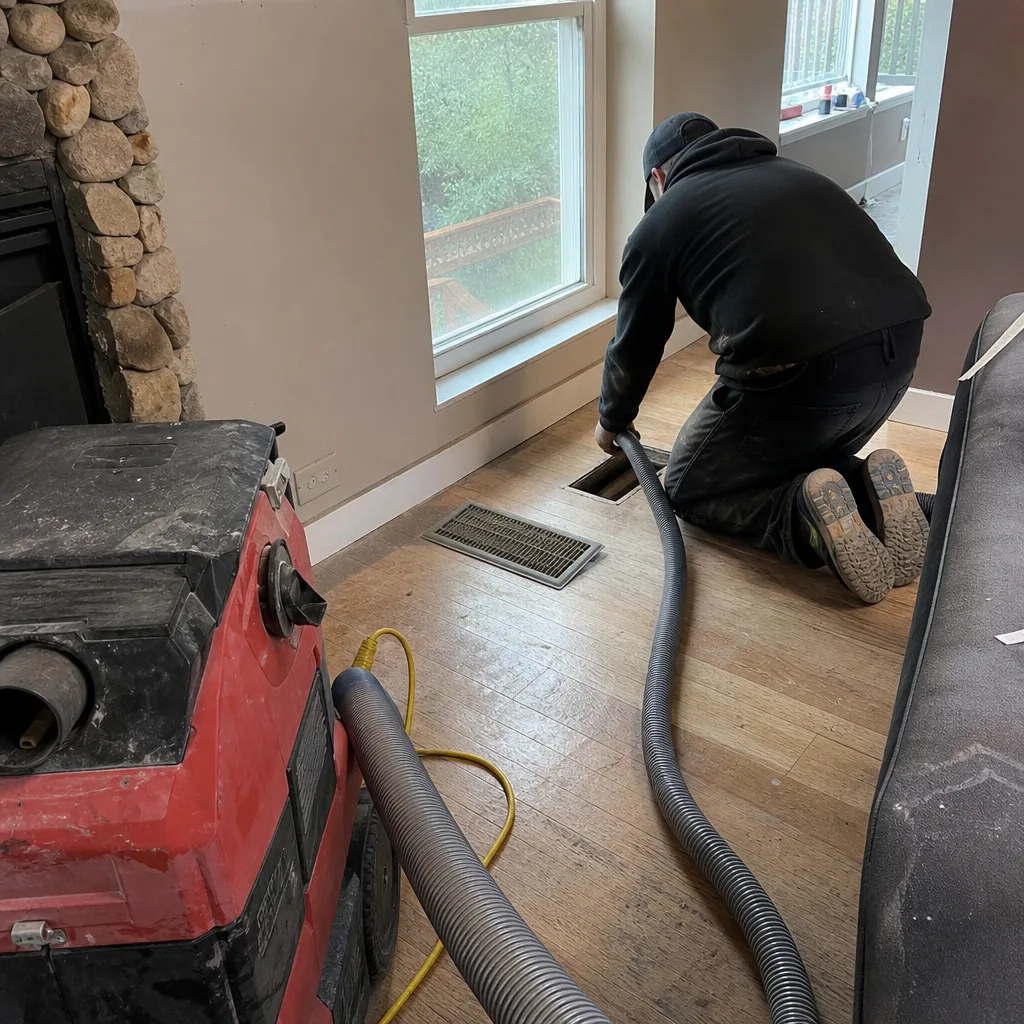 Before
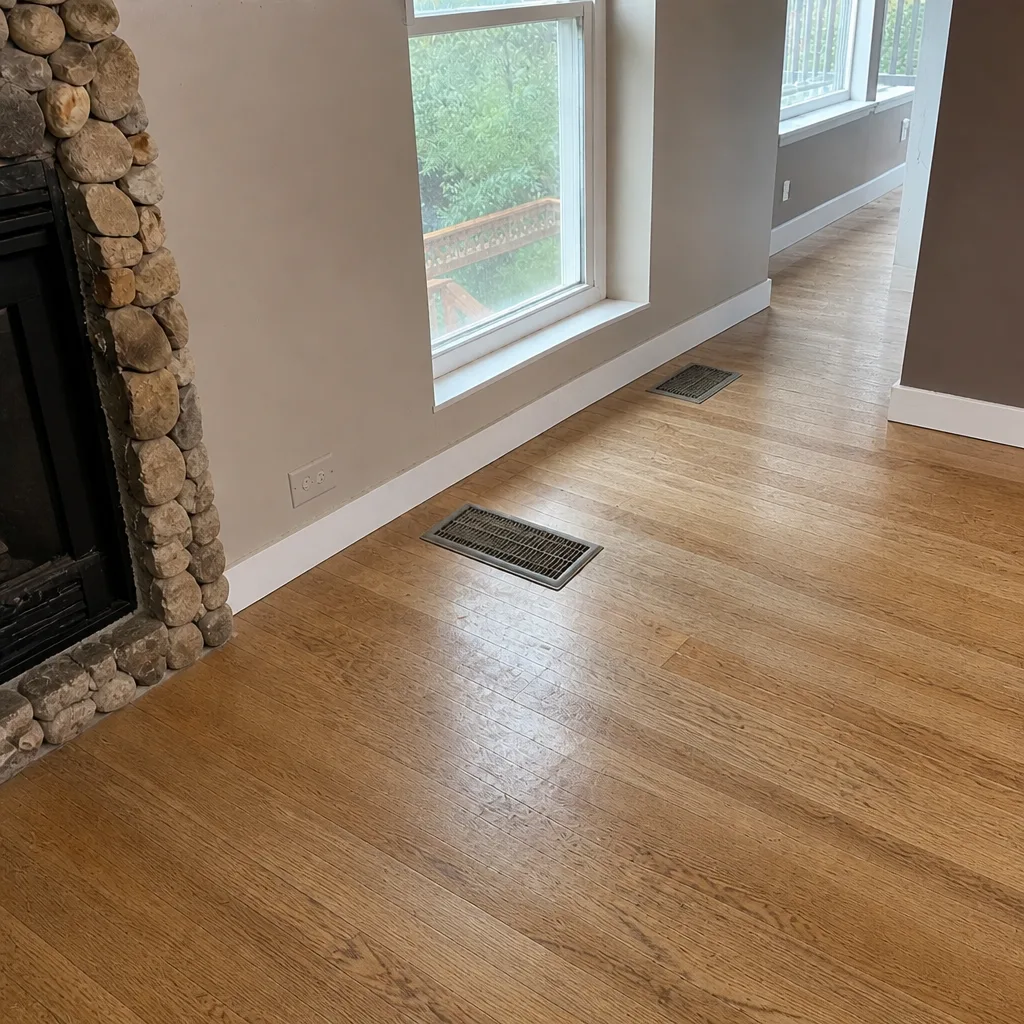 After
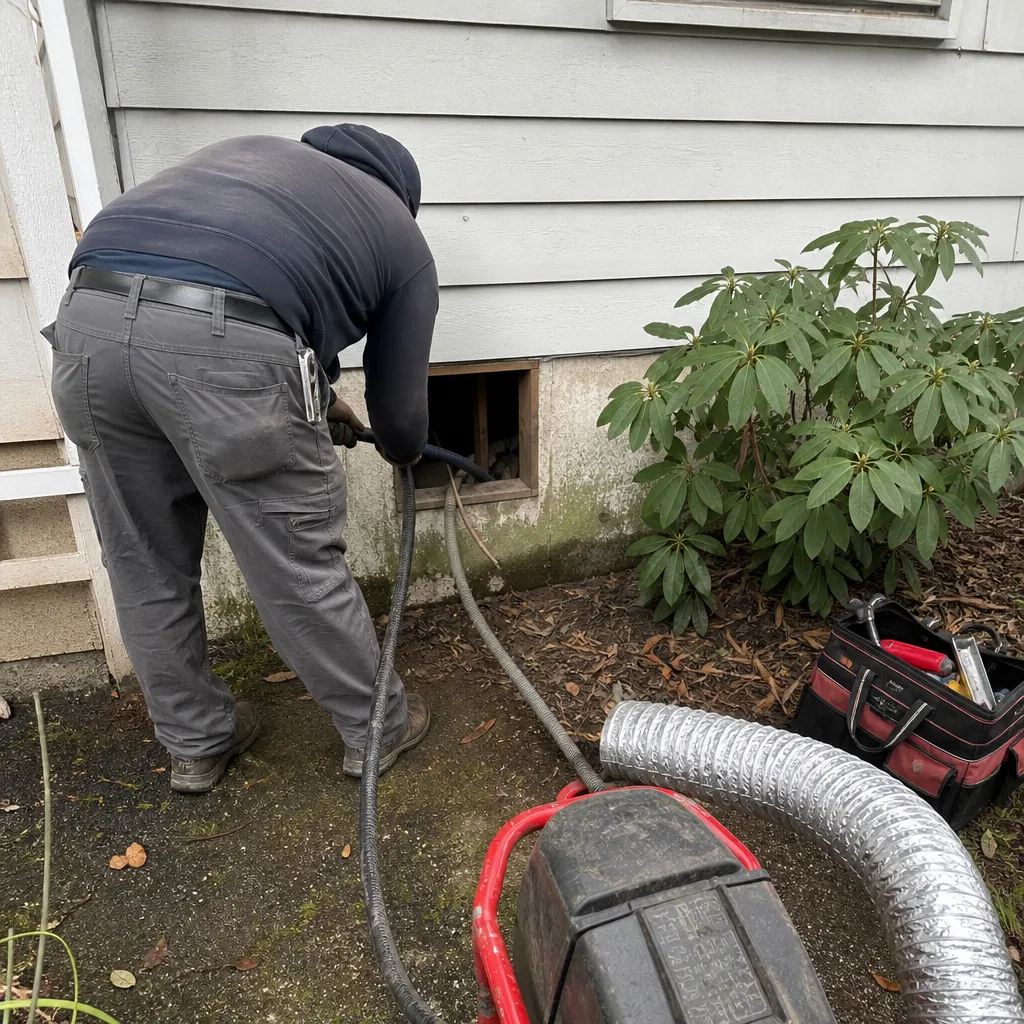 Before
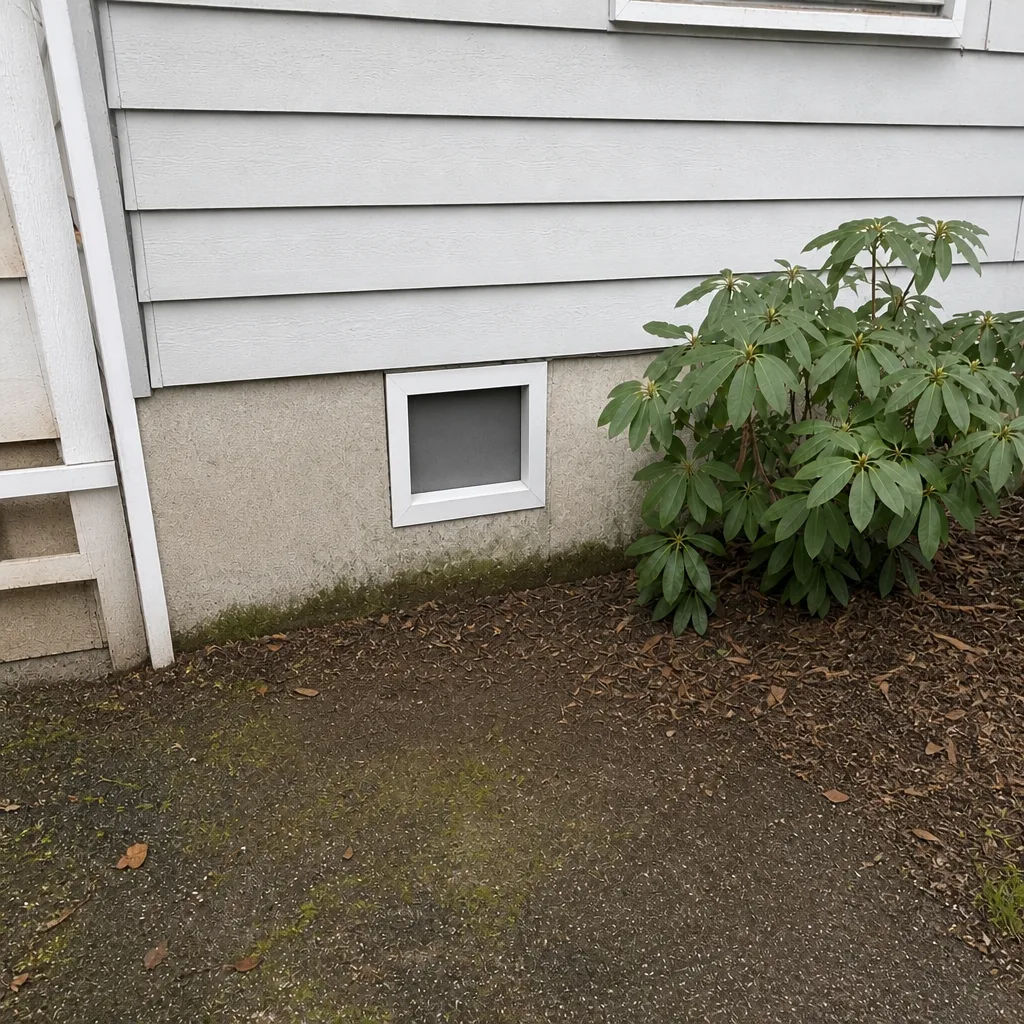 After
When to Call a Professional
Call for a professional inspection when you can answer yes to any of these: dust returns to your registers within 48 hours of wiping, the accumulation is dark gray or black rather than light, you see moisture streaking or mold at any supply register, you find rodent droppings or chewed insulation inside a duct boot, an odor persists or returns every time the system cycles, or one or more rooms have never heated or cooled properly. Also call if anyone in the household has recurring respiratory irritation that lifts when they’re away from home. These are the situations where a camera inspection and a full-system assessment tell you what’s actually going on, instead of you guessing at symptoms one at a time. Lynnwood Air Duct Cleaning offers free estimates in Lynnwood. Call (888) 743-3075. We answer 24/7. Fast dispatch from 7am to 7pm, Sunday through Friday.
Frequently Asked Questions
Most Lynnwood homes don’t need air duct cleaning on a fixed schedule; they need it when the warning signs show up. For a home with normal filtration and no pets or recent remodeling, that’s often not until you see dark dust, odor, or airflow problems. The honest answer is that a clean is warranted when the system has a problem, not by the calendar. Call (888) 743-3075 for an inspection and a straight answer about whether yours needs it.
Not always, but it’s a strong signal worth investigating. Fast-returning dust means something inside the system is actively producing it, usually dark dust from degrading liner, soot, or growth. It can also mean a filter is bypassing or undersized. A camera inspection tells you which. Call (888) 743-3075 to book one; estimates are free.
Burning dust at the first heat of the season is normal and should fade within hours. If it returns every time the system cycles, or you smell something acrid or chemical, treat it as a real problem. The latter can indicate a heat-exchanger or electrical issue rather than a duct problem. Shut the system down and have it inspected. Call (888) 743-3075 for that.
Mold usually shows as light or dark spotting at the supply register, a powdery film inside the boot, or a musty smell that runs with the fan. Confirming it takes a camera inspection and a look at the moisture source. If it’s active mold, the correct response is remediation with containment and negative air pressure followed by sanitizing, not a standard clean. Call (888) 743-3075 to arrange an inspection.
A per-vent price and a low coupon are the usual cause. They get the technician through the door, then the real scope gets added on site. We quote one flat price for the full system, agreed before work starts, and we show you before-and-after photos of your own ducts so you can see the work was done. Call (888) 743-3075 for a free written estimate.
If the warning signs are there, yes, because an inspection report and before-and-after photos give a buyer something concrete. If the system is clean and working, an inspection is usually the better spend. The right answer depends on what the camera sees, not on the home’s age alone. Call (888) 743-3075 and we’ll tell you which it is.
The Bottom Line
The warning signs that matter are not the ones you notice on a quick walk-through. They’re the ones you only catch if you know what to look for: dust that comes back within 48 hours, dark gray rather than light gray, rust streaks and musty smells that signal moisture, and the rodent and mold indicators that show up in Pacific Northwest homes in particular. Cosmetic dust is normal. Pattern, color, smell, and airflow are the read. If any of what you’ve found in this guide matches your home, an inspection tells you whether cleaning is the right next step or whether the real fix is sealing, remediation, or a mechanical repair. When the answer is cleaning, the equipment matters: Rotobrush and Nikro systems and, where needed, Abatement Technologies containment. When it’s sanitizing, Guardsman-grade products. And when the job also involves restoring your air quality setup, Honeywell and Aprilaire systems round it out. We show you what we pulled out, in photos, before we leave.
Call (888) 743-3075. We answer 24/7. Fast dispatch from 7am to 7pm, Sunday through Friday.
Written by the team at Lynnwood Air Duct Cleaning.