
Last updated November 25, 2026
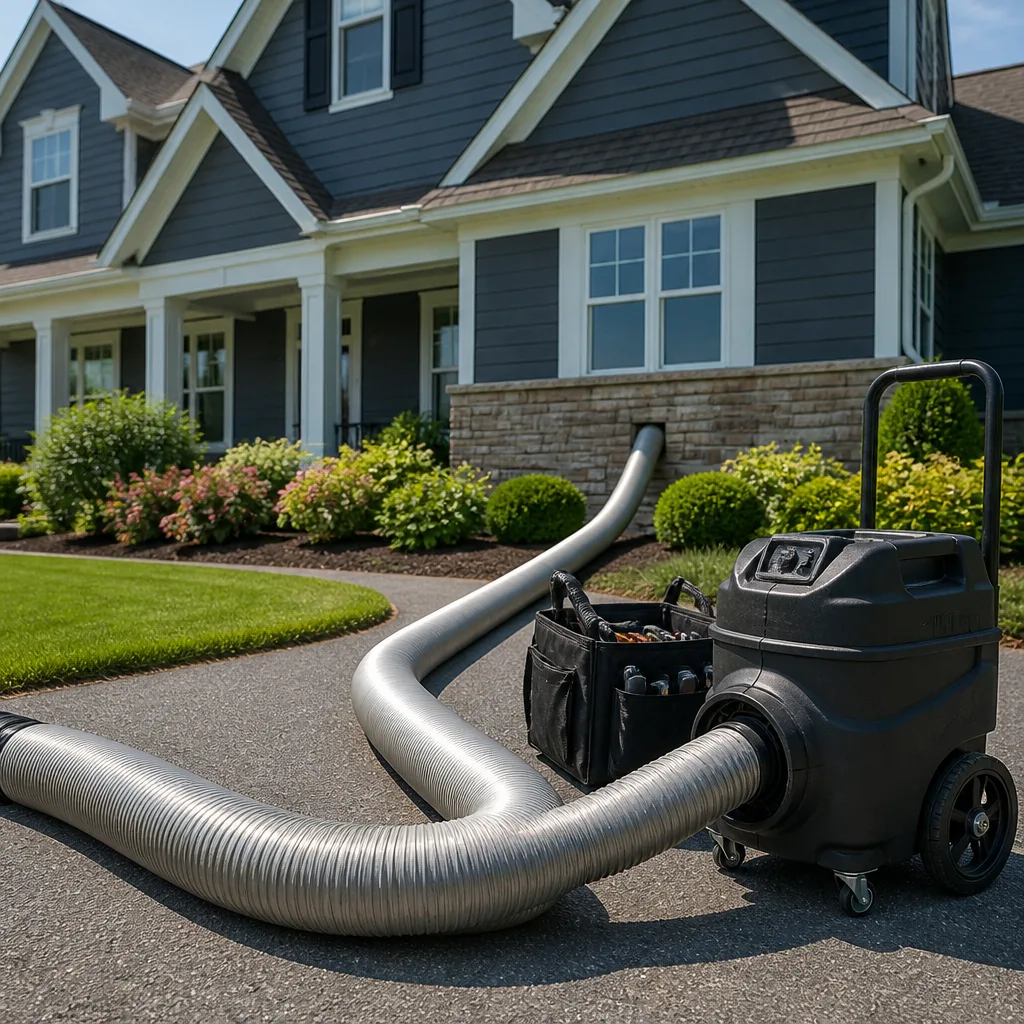 Whole-home duct cleaning
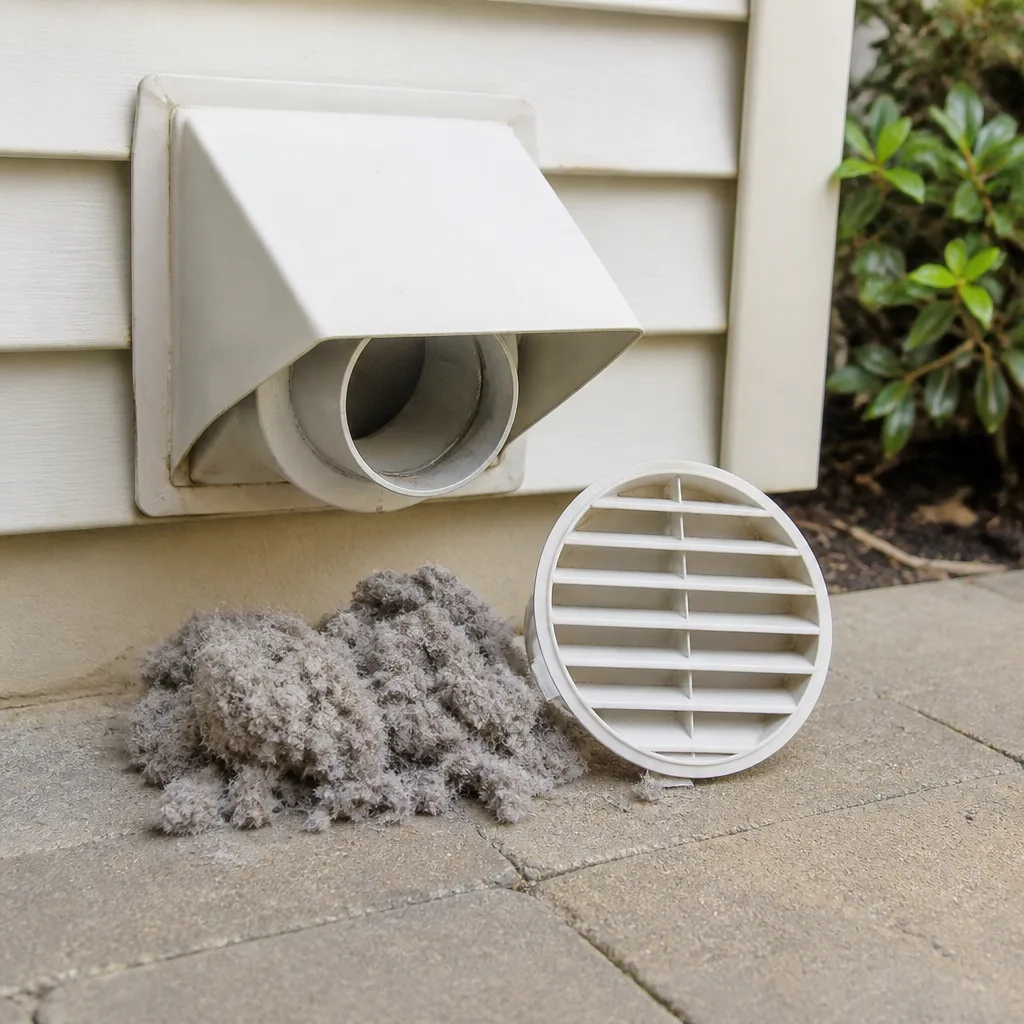 Dryer vent cleaning
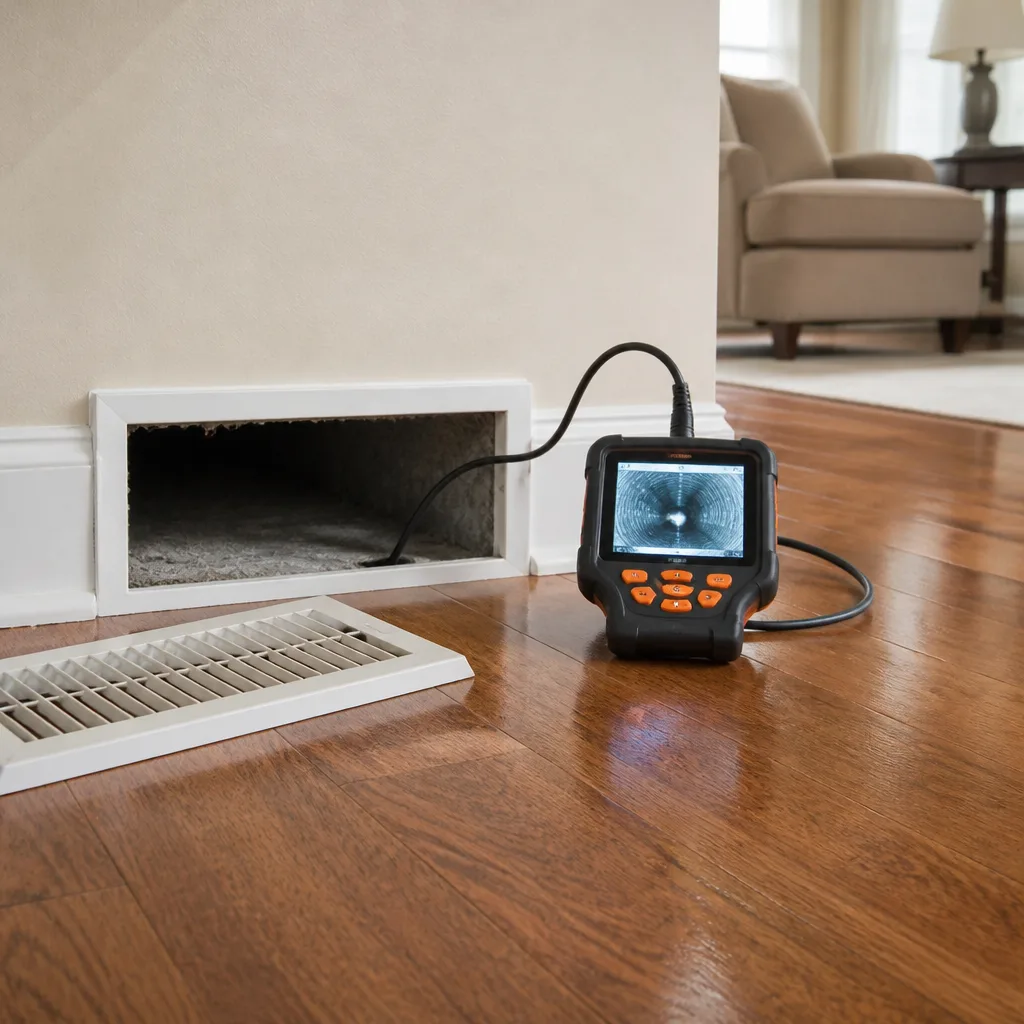 Camera inspection
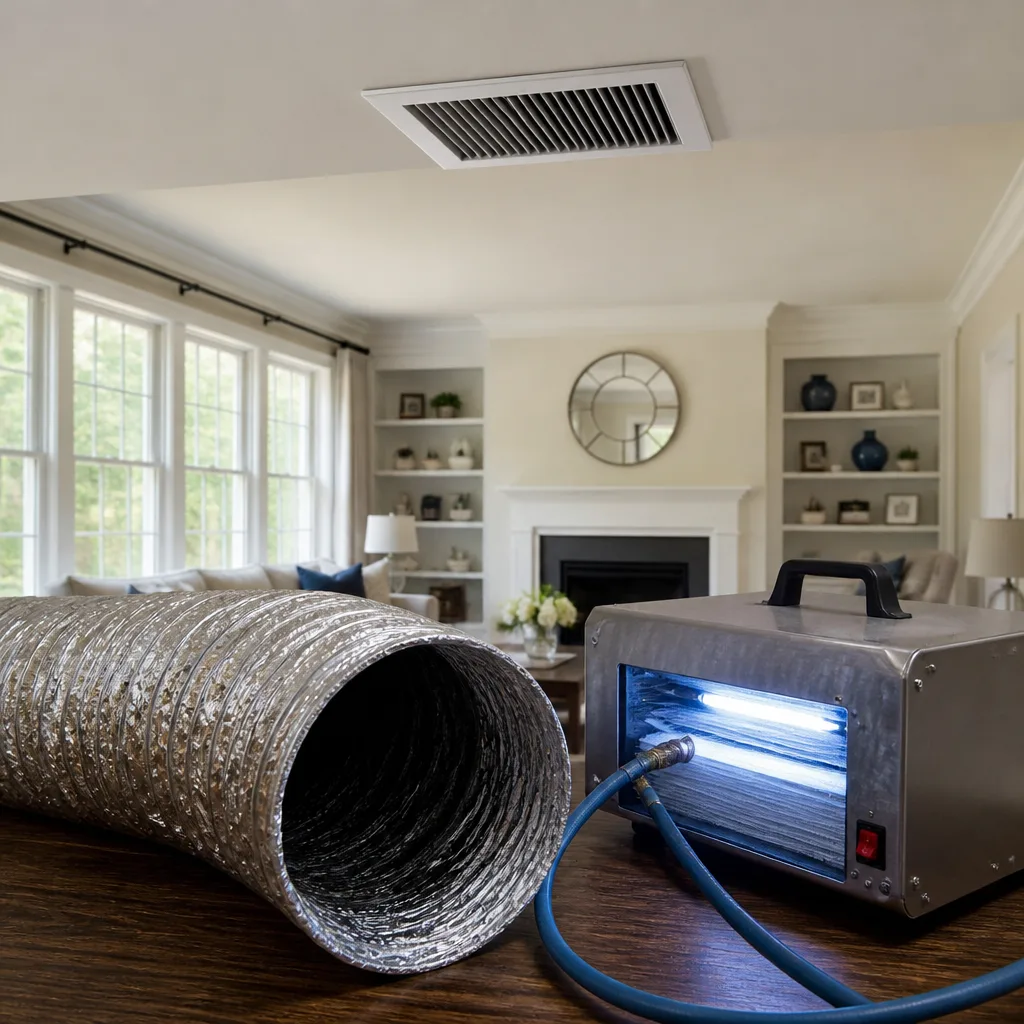 Sanitizing & deodorizing
Whole-system duct and dryer vent check with before-and-after photos - you see exactly what came out of your vents
That "$99 whole-house special" is a bait ad - the real number appears once they are in your hallway, or the "clean" is a shop-vac at the register. We photograph the inside of your ducts before and after instead.
The Complete Guide to Air Duct Cleaning in Lynnwood
Most Lynnwood homeowners who book a duct cleaning don’t have dirty ducts. They have a dirty system. The distinction rarely gets explained before the equipment comes through the door, and it’s the single biggest reason two duct cleaning jobs at the same price can deliver completely different results. The EPA’s well-known position that duct cleaning has never been shown to prevent health problems is worth reading carefully, because it applies to duct-only cleaning, not to a full HVAC system clean that reaches the coils, plenum, air handler and every register. This guide maps every component of that full-system job, in the order it has to happen, so you know exactly what you’re paying for and what gets quietly skipped when nobody’s watching. Call (888) 743-3075. We answer 24/7. Fast dispatch from 7am to 7pm, Sunday through Friday.
Quick Answer
Air duct cleaning in Lynnwood is a full-system procedure that cleans supply ducts, return ducts, the plenum, evaporator coil, air handler and every register as one connected system, not as separate line items. It matters more here than in dry climates because Lynnwood’s mild, damp Marine West Coast conditions keep humidity elevated through most of the year, and that humidity gives mold and dust-mite pressure a longer active season than a drier market would see. A credible job uses a negative-pressure vacuum sized to your system’s airflow and documents the result with video, not just still photos.
Styles & brands we work with
- Whole-home duct cleaning
- Dryer vent cleaning
- Camera inspection
- Sanitizing & deodorizing
Table of Contents
- What a Full-System Clean Actually Means
- Component-by-Component: What Gets Cleaned, in What Order
- Negative Pressure and CFM: Why the Vacuum Rating Is the Whole Game
- Why Lynnwood’s Climate Makes Full-System Cleaning More Critical
- What “Before and After” Documentation Should Look Like
- Red Flags in the Pacific Northwest Duct Cleaning Market
- Related Work That Belongs in the Same Visit
- What Drives Cost on a Lynnwood Job
What a Full-System Clean Actually Means
A full-system clean treats your ductwork, air handler, coil and registers as one piece of equipment because that’s how the air travels. Dust that settles on the evaporator coil doesn’t stay there. It gets pulled into the airstream, pushed into the supply ducts, and blown out through the registers into the rooms you occupy. Clean the ducts but leave the coil coated, and you’ve polished half a system that will re-contaminate the half you just cleaned. That’s the contamination cycle, and it’s the reason duct-only cleaning so often disappoints.
We approach air duct cleaning in Lynnwood as a containment project first and a cleaning project second. Contaminants are heavy, they’re small, and they get airborne the moment you disturb them. Unless the work area is sealed and held under negative pressure, the debris you’re removing ends up in the room with you. Our Abatement Technologies equipment is the reason we can hold that containment on jobs that need remediation-level protocols rather than a light surface pass.
What separates a full-system job from a partial one comes down to scope:
- Every supply run, from the plenum branch to the boot at the register
- Every return run, including wall-cavity and panned-joist returns common in Lynnwood homes of certain vintages
- The main supply and return plenum
- The evaporator coil and drain pan
- The air handler cabinet and blower wheel
- Every supply and return register and grille
If a proposal covers only “the ducts” and never mentions the coil or the plenum, you’re looking at a partial job with a full-system name on it. Ask specifically which of these six items the price includes.
Component-by-Component: What Gets Cleaned, in What Order
Sequence matters more than most homeowners expect. Cleaning a supply line before the plenum is clean means you pull debris backward into the trunk you just finished. Doing the coil first without containment means you coat the whole system in loosened material. The order below is the one that holds debris under control from start to finish.
- Containment and vacuum setup. The negative-pressure vacuum is connected, all openings are sealed, and the pressure differential is verified before anything is agitated.
- Register and grille removal. Every supply and return register comes off and gets cleaned separately. Grilles that stay on during cleaning just block access to the boot.
- Return duct runs. Returns carry the heaviest load and get cleaned first, from the register boot back toward the plenum so material travels away from the occupied rooms.
- Supply duct runs. Each branch is cleaned with a rotating brush or air whip matched to the duct material. Flexible duct gets gentler tooling than rigid sheet metal to avoid damaging the liner.
- Main supply and return plenum. The trunk lines get cleaned once the branches are clear, so nothing upstream repopulates the runners.
- Evaporator coil and drain pan. The coil is cleaned in place where accessible, and the drain pan is cleared and flushed so it drains properly afterward.
- Air handler cabinet and blower wheel. The blower is where dust tends to bake onto the fins and throw the wheel out of balance, so it gets cleaned last among the mechanical components.
- Sanitizing. Only after the mechanical clean does a sanitizing product get applied. Applying sanitizer over a dirty coil wastes the product and does nothing useful.
After the clean, register grilles go back on and the system runs for a short cycle with new filtration in place. That final run is a check, not a formality; if anything was missed, the airflow will tell you.
Negative Pressure and CFM: Why the Vacuum Rating Is the Whole Game
Everything in a duct cleaning job depends on the vacuum pulling harder than the dust can escape. CFM, or cubic feet per minute, is the measure of how much air the vacuum moves. A machine rated too low for your duct system’s internal volume doesn’t extract debris. It stirs it loose and redistributes it, which is the opposite of the outcome you paid for. This is why some jobs leave a home dustier afterward than before, and it’s not a mystery when you understand the numbers behind it.
Professional equipment built for this work is sized to the load. That’s what our Rotobrush and Nikro systems bring to a job that consumer-grade shop vacuums and cheap “duct cleaning” attachments can’t match. Rotobrush units are purpose-built for residential duct interiors, with tools that fit the inside of the duct and pull as they brush. Nikro equipment covers the heavier side, including larger duct capacities and the contact-vacuum work that follows the main clean. When a contractor shows up with a shop vac and a hose, they’ve brought a dust stirrer, not a dust extractor.
What to ask before you book:
- What’s the CFM rating of the vacuum you’ll use on my system?
- Will you verify negative pressure with a gauge, or just assume the seals are holding?
- What happens to loosened debris that escapes the duct during cleaning?
The last question is the practical one. Any contractor who can’t explain containment should not be doing work that creates airborne dust inside your home.
Why Lynnwood’s Climate Makes Full-System Cleaning More Critical
Lynnwood’s Marine West Coast climate keeps humidity elevated through most of the year. Winters are mild and wet, springs are damp, and the dry stretch in summer is short. That pattern is hard on HVAC systems in a way dry-climate cities never deal with. Moisture in ductwork doesn’t just make dust heavier; it gives mold spores a longer window to establish, and it keeps dust-mite pressure in the home active well past the season a drier market would see it clear up. In a humid climate, a duct system that houses settled dust sits on a wet foundation rather than a dry one.
That has three concrete consequences for Lynnwood homes. First, the coil matters more. An evaporator coil runs wet most of the cooling season here, and wet coil fins catch dust and hold it, which is exactly the condition that supports biological growth on the coil surface. Second, panned-joist and wall-cavity returns, common in older Lynnwood neighborhoods, can pull air through building cavities that stay damp year round. Third, the mild climate means the system runs a lot of the year, so airborne debris has more hours to deposit and more cycles to re-suspend.
The practical reading is straightforward: in Lynnwood, full-system cleaning isn’t a once-per-decade luxury. It’s a maintenance step the local climate makes more meaningful, because the wet side of the system is almost always the side getting skipped. We handle HVAC cleaning as part of the same job for exactly this reason; cleaning around the mechanical components while leaving the coil and air handler untouched is the most common partial job we see corrected.
What “Before and After” Documentation Should Look Like
Photos are the industry standard because they’re easy to produce and easy to stage. A still image of a clean duct proves almost nothing on its own. Video inspection is what actually demonstrates the work, because it captures motion, light reflection, and the inside of duct runs a still photo can’t reach or fabricate.
Here’s what credible documentation looks like from a contractor, and it should be part of the price:
- Pre-work video inside the main trunk. Not a photo of the grille, an actual camera view inside the duct.
- Pre-work video of the coil and air handler. The mechanical components are where the real evidence lives.
- Post-work video in the same locations. Same angle, same light, same run of duct. Compare side by side.
- The removed debris bagged and shown to you. Not left in the truck. What came out of the system is the clearest proof the system actually held what the vacuum pulled.
- Written scope confirmation. Which components were cleaned, which were inaccessible, and why.
We show you what we pulled out because the alternative is a contractor’s word against a bag nobody saw. If a crew finishes and can’t produce video from inside your specific ducts, ask for it before you pay.
Red Flags in the Pacific Northwest Duct Cleaning Market
Washington State sees a steady stream of duct cleaning operators working across the region, and most of the market is legitimate. The problem is the fringe, and it’s recognizable once you know what to look for.
Carpet-cleaning companies adding ducts as an upsell. A carpet cleaning crew with a wand and a portable vacuum can do a serviceable carpet clean and a poor duct clean. Different equipment, different process, different containment requirements. Ask what machine they’ll use on your ducts. If the answer is a shop vac with a hose, the equipment answers the question for you.
Unlicensed HVAC work under a cleaning proposal. Cleaning and servicing the mechanical components around the coil and air handler requires HVAC competency. If a proposal includes coil cleaning or air handler work and the contractor can’t tell you who’s licensed for that component of the job, the price is being built on someone cutting a corner.
Bait-and-switch add-ons. A low headline price is often the entry point for the real cost, which arrives as an add-on for each supply run, sanitizing, or coil cleaning once the technician is inside your home. One flat price for the whole system, agreed in writing before work starts, is the version that doesn’t have a surprise at the end.
No containment on the vacuum. A crew that sets up without sealing openings is either going to make a mess or is counting on you not noticing the dust.
A proposal that never mentions the coil. Elaborate as it needs to be, a duct cleaning proposal that leaves the coil, plenum and air handler off the list is a partial job.
Related Work That Belongs in the Same Visit
A full-system clean reaches several parts of the home’s air and ventilation path that might otherwise turn into separate service calls. Getting them on one visit saves the setup costs and the disruption of opening up the system twice.
dryer vent cleaning is the obvious one for a Lynnwood home. Dryer vents are another duct run, and a lint-clogged vent is both a fire risk and a restriction on the dryer’s efficiency. The Pacific Northwest’s damp climate makes the internal moisture buildup in a clogged vent worse, because the home’s drier indoor air and the dryer’s exhaust don’t always dry the vent interior the way a hot dry climate would.
Duct repair and sealing are the second natural pairing. Cleaning a system that has disconnected joints, torn flex duct, or gapped boots is cleaning a system that leaks. Sealing happens after the clean, when the ductwork is accessible and you can see where air is escaping. If returns in the Lynnwood neighborhoods with older housing stock are pulling air through building cavities, sealing the accessible joints is where that gets corrected.
Air quality products fit the same pattern. Our work with Honeywell and Aprilaire filtration and humidification products is designed to extend the clean into long-term air quality improvement rather than let the system re-contaminate. Guardsman sanitizing products complete the decontamination step, which is a recognized protective-care brand and not a generic aerosol. Running this as one call, with one company handling the clean, the vent, any repairs and the sanitizing, is the version that holds together.
What Drives Cost on a Lynnwood Job
Cost for a full-system clean in Lynnwood follows a small number of variables, and the proposal should state which apply to your home. We give one flat price per system agreed before any work starts, so the variables below get priced up front rather than discovered mid-job.
- Number of supply and return runs. A single-story home with ten supplies and three returns is a shorter job than a split-level with twenty supplies and six returns.
- Duct material and condition. Rigid sheet metal cleans quickly. Flexible duct needs slower, gentler tooling. Damaged duct adds repair time.
- Access and containment difficulty. Crawlspace runs, mechanical closets, and the wall-cavity returns common in older Lynnwood homes need more time to seal and work inside.
- Coil, plenum and air handler cleaning. These are the components most often skipped and most important to price in. Ask explicitly whether they’re included.
- Sanitizing. Some jobs don’t need it. The ones that do get it after the mechanical clean, not before.
- Dryer vent cleaning. Usually priced as its own line item, and worth adding while the equipment is set up.
What doesn’t drive cost: a per-vent price. That pricing model is what turns a quote into a surprise. The system is the unit, and the flat price covers it.
Common Mistakes to Avoid
- Booking on headline price alone. The lowest quote often excludes the coil, the plenum, or the return runs, and the add-ons arrive once the technician is inside. Ask for the written scope before you compare.
- Assuming the ducts and the system are the same thing. Duct-only cleaning leaves the coil, plenum and air handler contamination in place, and the cycle restarts the moment the system runs.
- Accepting photos as documentation. Still photos can be reused or staged. Video from inside your duct, before and after, does what a photo can’t.
- Letting unlicensed hands near the mechanical side. Coil and air handler cleaning is HVAC work. If the contractor can’t tell you who’s licensed for it, ask before the proposal is signed.
- Skipping the coil check because the office smells fine. Lynnwood’s mild, damp climate keeps the coil wet most of the cooling season, and coil grime doesn’t always announce itself as a smell until it’s well established.
- Cleaning without sealing afterward. A clean system with disconnected boots and torn flex will re-contaminate fast. Repair and sealing belong in the same planning conversation.
- Treating dryer vent cleaning as an optional add-on. It’s a separate run with its own restriction and fire-safety profile, and the Lynnwood humidity makes a clogged vent worse rather than better.
See the difference
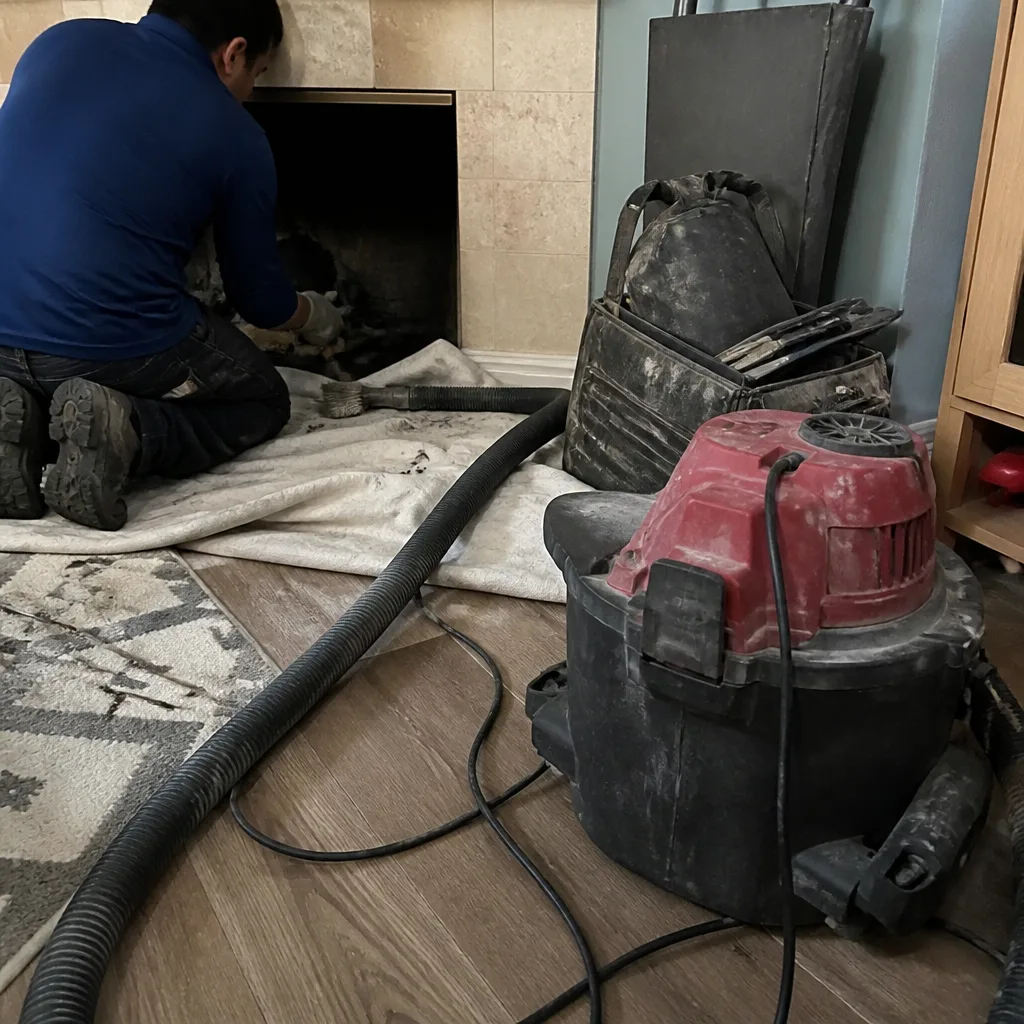 Before
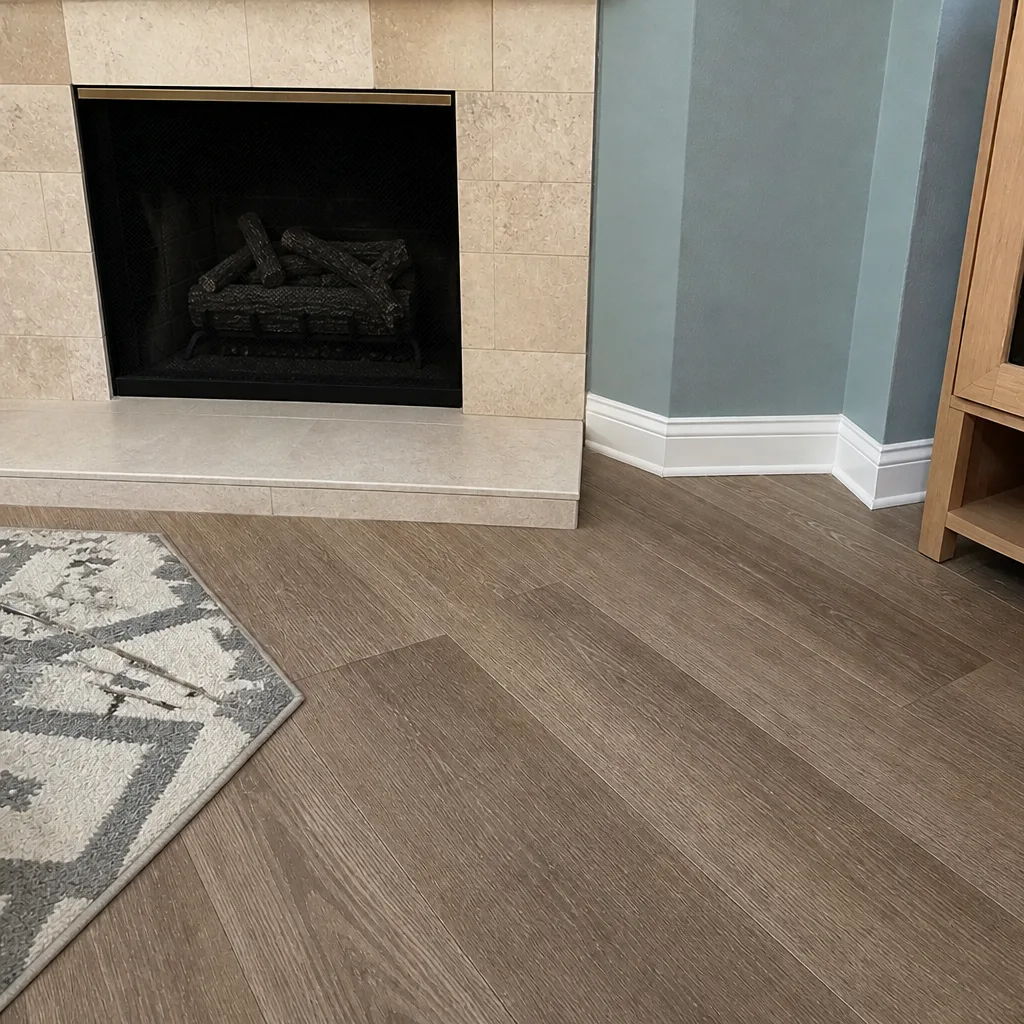 After
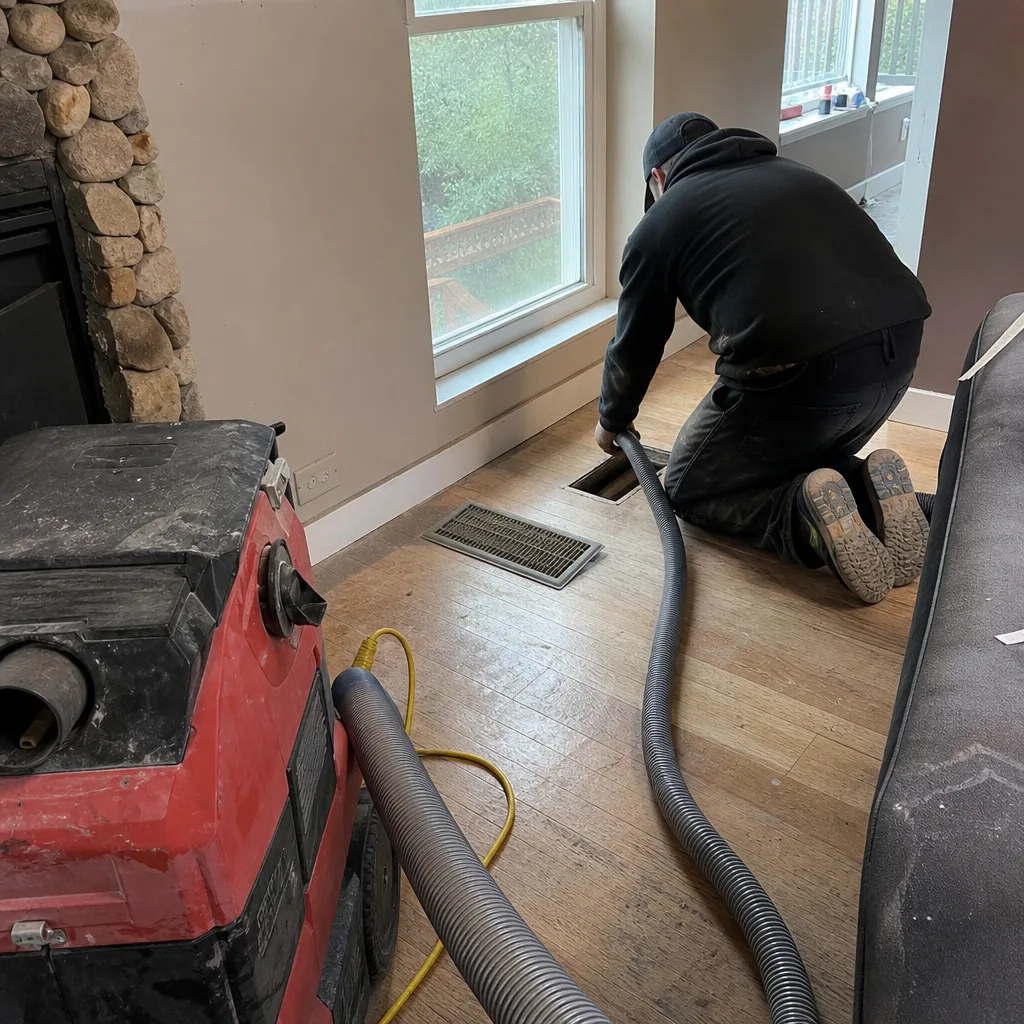 Before
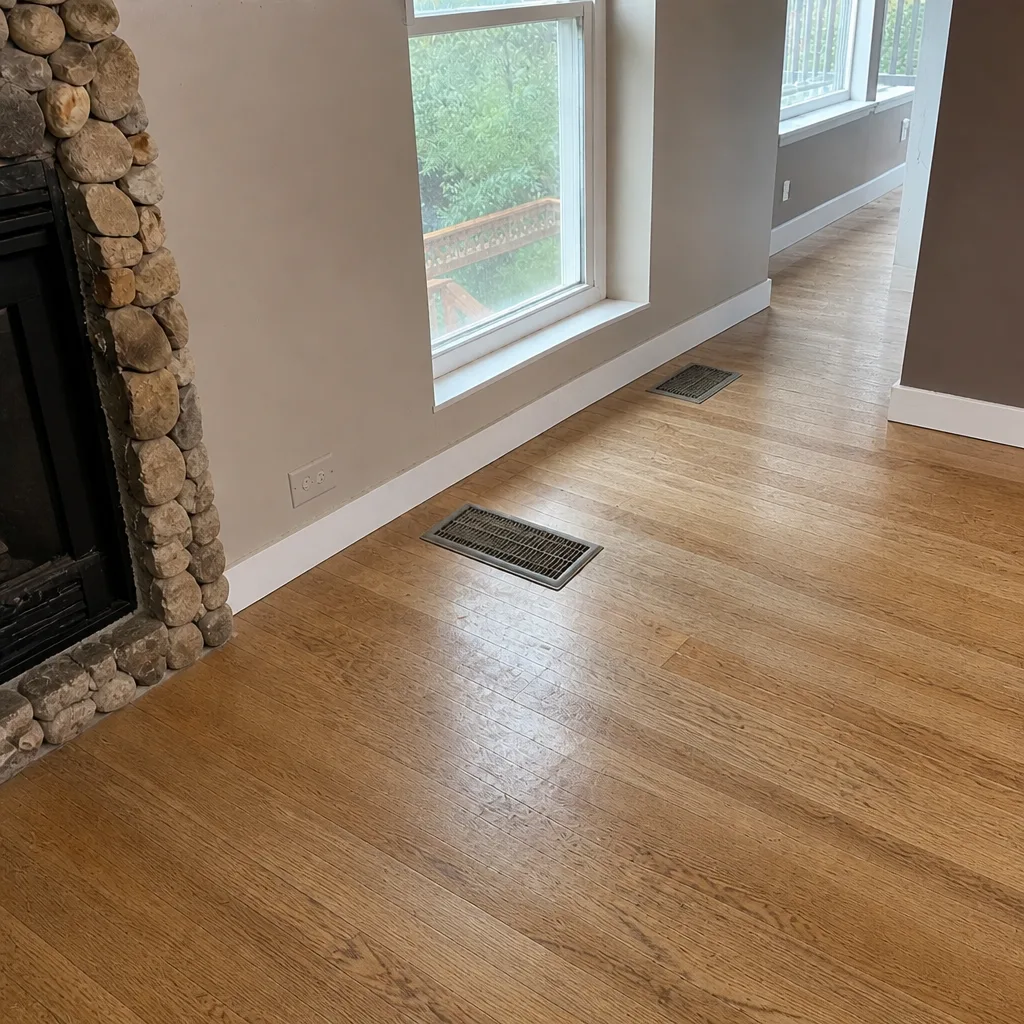 After
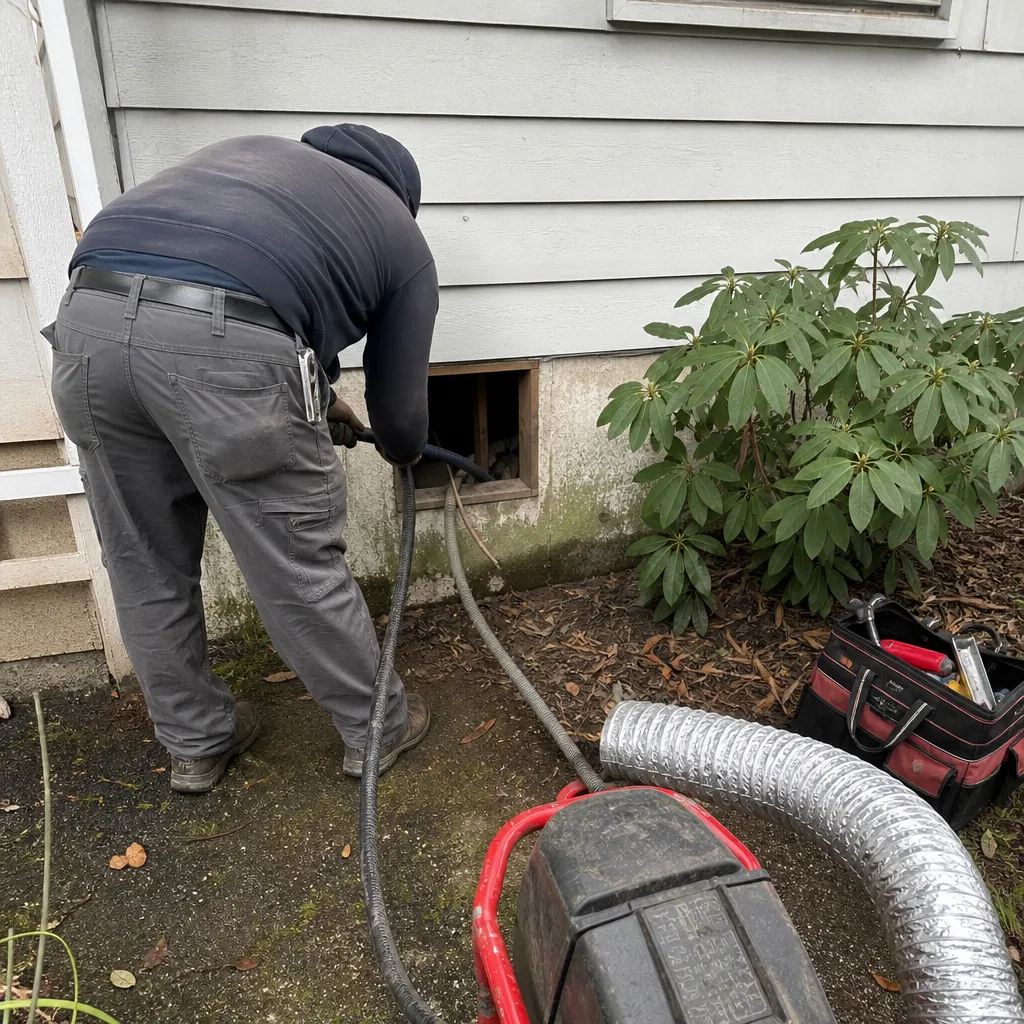 Before
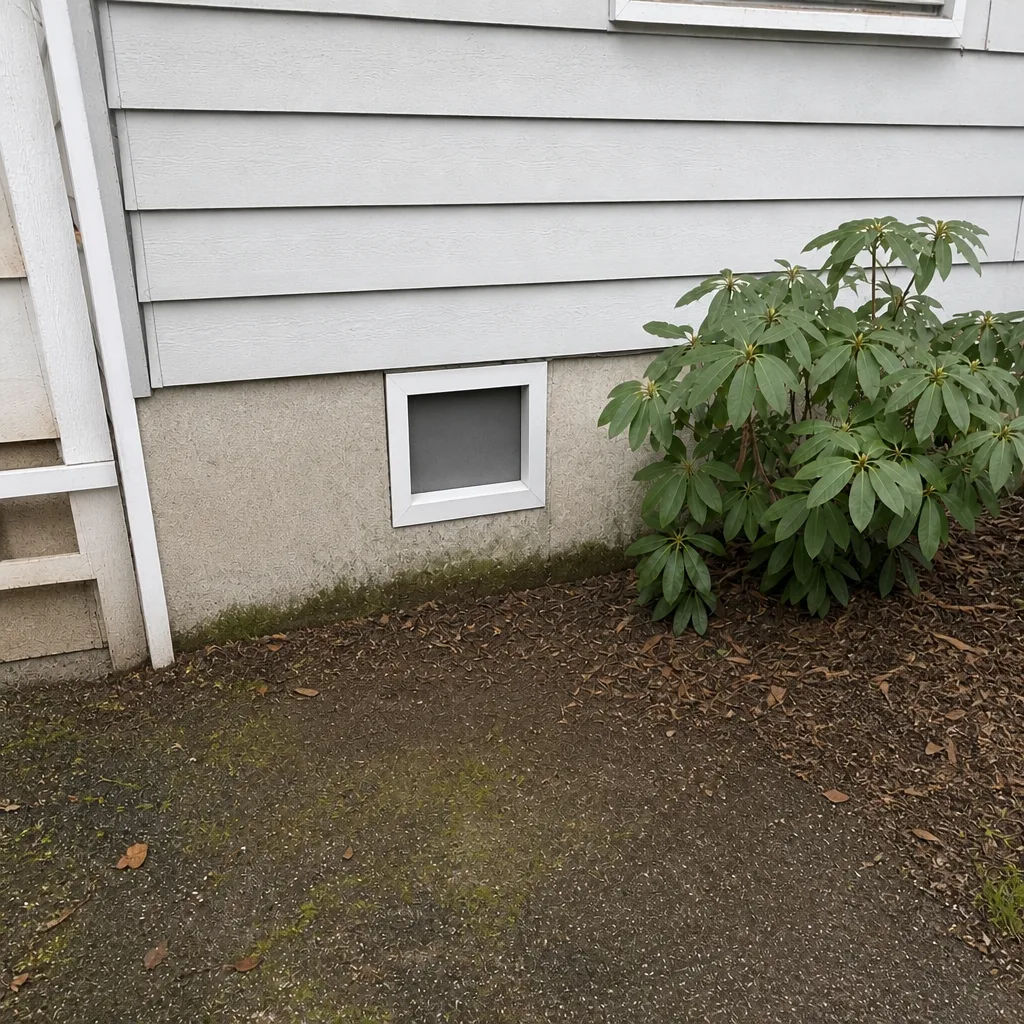 After
When to Call a Professional
Some conditions point to a full-system clean rather than a spot treatment. Visible debris blowing out of the registers when the system kicks on. A noticeable dust film settling on furniture within days of cleaning. An unexplained increase in allergy-type symptoms in the household that tracks with the system running. A coil that’s visibly fouled or a drain pan that’s slow to clear. A recent renovation that produced sawdust or drywall dust with the system running. Any of these is worth a professional check rather than another filter change. The safety-relevant ones are the coil, wiring and air handler, because opening the mechanical components of an HVAC system exposes mains electrical connections and, in some configurations, gas-fired components. That part should be left to a trained professional.
Lynnwood Air Duct Cleaning offers free estimates in Lynnwood. Call (888) 743-3075 to book one.
Frequently Asked Questions
Air duct cleaning in Lynnwood is priced per system, not per vent, and the written estimate sets the final price. As a rule, a flat full-system price accounts for the supply and return runs, the plenum, the coil, the air handler and every register, and that’s the number to compare across contractors rather than a per-vent figure. Call (888) 743-3075 for an exact quote; estimates are free.
Cheaper quotes are almost always narrower in scope, and the difference shows up as skipped components rather than saved labor. Duct-only cleaning that leaves the coil and plenum untouched is the most common version of a low quote, and the add-ons for those items often arrive once the technician is inside the home. Ask what the price includes, in writing, and compare the scopes rather than the headline numbers. Call (888) 743-3075 and we’ll walk through what’s in ours before you book.
Video inspection from inside your ducts before and after the clean is the standard, along with the removed debris bagged and shown to you in person. A contractor who can’t produce either is asking you to take the price on faith. Our Lynnwood Air Duct Cleaning team documents every job this way and shows you the result before the crew packs up. Call (888) 743-3075 to book an estimate.
There’s no single industry-mandated interval, and any contractor who quotes you a fixed schedule without looking at your system is guessing. In Lynnwood’s damp Marine West Coast climate, the practical signal is the coil and the return ducts, since both sit on the wet side of the system and accumulate grime faster than in a dry market. Most homeowners land on a multi-year interval, but a visually fouled coil or a recent renovation moves that up. Call (888) 743-3075 and we’ll tell you what your system looks like rather than what the calendar says.
The EPA’s position is that duct cleaning has never been shown to prevent health problems, and that remains accurate as a statement about duct-only cleaning. A full-system clean that reaches the coil and air handler addresses the contamination source, which is the part most relevant to indoor air quality, but we don’t make health claims about it. For a household with a known medical concern, speak with your doctor. Call (888) 743-3075 for a free estimate and a clear scope of what a full-system clean covers in your home.
Yes. Our HVAC cleaning and containment work covers commercial duct systems where the same full-system logic applies, with larger equipment and more containment. The Abatement Technologies equipment matters most on commercial jobs because the pressure differentials and the debris loads are larger. Call (888) 743-3075 and we’ll match the scope to the building.
The Bottom Line
The difference between a duct cleaning and a full-system clean is whether the coil, plenum, air handler and registers all get addressed in the right order, under containment, with video proof at the end. In Lynnwood, the wetter climate makes the mechanical components and the return runs the parts that matter most, and those are the parts most easily left out of a proposal. Ask for one flat price per system in writing, ask specifically which of the six components it includes, and ask for video before and after. That’s the version of this job you’re actually trying to buy. Call (888) 743-3075. We answer 24/7. Fast dispatch from 7am to 7pm, Sunday through Friday.
Written by the team at Lynnwood Air Duct Cleaning.